


Supply Sovereignty
High-purity industrial
ZEOLITE
"We are not a mining company. We are a climate materials company (Climate Tech). We hold the intellectual property for the processing, a raw material source in Peru independent of Chinese or Turkish supply chains, and a proven import-substitution model."
Zeolite is a fascinating mineral. Its unique, porous "honeycomb" structure allows it to act as a molecular sieve, catching, holding, and releasing various elements based on need.
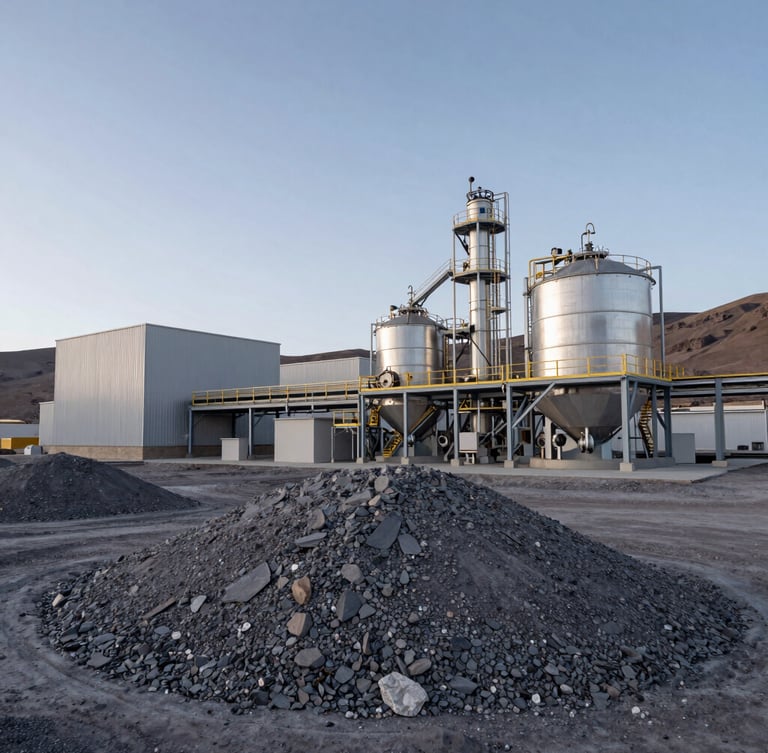
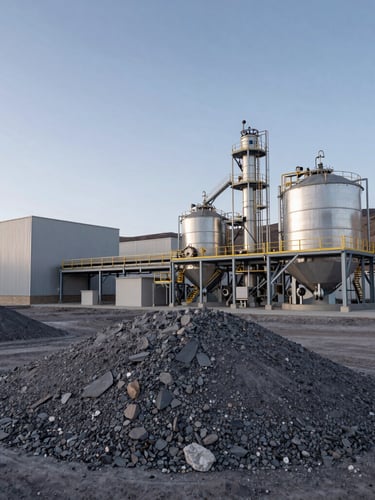
Zeolite Industrial Plant in Lima
Peru Supply Sovereignty
Raising USD 235,500 minimum to commission a processing plant producing Zeolite (Heulandite) from our Huancavelica concession. Demand validated by LOIs. Start-up target: 500 t/month.
Test: XRD (X-Ray Diffraction)
Adsorption/quality for oxygen or other applicationsResult: Heulandite 66.25% (according to SLab Peru IE-2026-1580)
Laboratory: ISO/IEC 17025
INVESTMENT HIGHLIGHTS
Why Mineral Andeans?


Zeolite Projected
Global Distribution
"Growth Roadmap 2027–2035"
Phase 1: Production and export of zeolite from Peru.
Phase 2: International distributor network in the Americas and Europe.
Phase 3: Incorporation of other industrial minerals (bentonite, silica, kaolin, etc.).
Phase 4: Regional storage centers in the United States and Europe.
Phase 5: Transforming "Mineral Andeans, In." into an integrated industrial minerals company serving the agriculture, water, infrastructure, and environmental markets.
Technical Validation
Parameter: Heulandite
Result: 66.25%
Source: SLab Peru IE-2026-1580
✅ Delaware Corporation
✅ Huancavelica natural zeolite resource (Heulandite-based)
✅ Lab validation (XRD: Heulandita 66.25%)
✅ LOI validated demand (initial offtake)
✅ Plant in Lima targeting 500 t/month
✅ ESG / environmental applications
✅ Export potential
✅ Management Experience
✅ Growing Global Demand
✅ Strategic South American Location
The Growing Importance of Zeolite
The global market for both natural and synthetic zeolites is experiencing robust growth, driven by a global shift toward sustainable industrial practices and stricter environmental regulations.
Key Growth Drivers
The Green Transition
As industries face immense pressure to decarbonize, zeolite's dual capability to reduce emissions in cement production and directly trap greenhouse gases via carbon capture positions it as a high-value material for climate tech.
Resource Conservation
With global water scarcity rising and agricultural soils degrading, zeolite’s ability to clean polluted water and optimize fertilizer usage directly addresses global food and water security challenges.
Synthetic Innovation
While natural zeolites are cost-effective for bulk uses like agriculture and cement, the chemical industry is rapidly innovating with synthetic zeolites. These custom-engineered variations possess uniform pore sizes tailored perfectly for highly advanced applications, such as petroleum refining catalysts and targeted medical oxygen concentrators.
Ultimately, what makes zeolite so important is its adaptability. It is a rare example of a single mineral that simultaneously solves resource efficiency issues in heavy industry while providing non-toxic, eco-friendly alternatives for farming and environmental cleanup.
Agriculture
In agriculture, zeolite acts as a highly efficient, sustainable soil conditioner. Because of its high Cation Exchange Capacity (CEC), it holds onto essential plant nutrients—like potassium ($K^+$) and ammonium ($NH_4^+$)—and prevents them from washing away during heavy rains or irrigation.
Additionally, it improves water retention in sandy soils and enhances aeration in clay-heavy soils. By releasing nutrients slowly over time, it minimizes the need for excessive chemical fertilizers and prevents hazardous runoff into nearby water systems.


Water Treatment
Zeolite is widely utilized as a natural filtering medium to purify drinking water, municipal wastewater, and industrial effluents. Its negatively charged framework is highly effective at capturing positively charged toxic heavy metals such as lead ($Pb^{2+}$), cadmium ($Cd^{2+}$), and zinc ($Zn^{2+}$).
It is also exceptional at removing ammonium ($NH_4^+$) from water, preventing eutrophication (the dense growth of plant life that suffocates aquatic ecosystems). Unlike sand filters, zeolite traps microscopic particles within its internal channels, leading to significantly clearer water.


Animal Feed
When added to livestock diets, zeolite serves as an effective digestive aid and toxin binder. It easily adsorbs mycotoxins (dangerous toxins produced by fungi found in moldy grains) within the animal's digestive tract, preventing them from being absorbed into the bloodstream.
Furthermore, it regulates the release of ammonium during digestion, which promotes better nitrogen utilization, boosts overall feed conversion efficiency, and significantly reduces the odor of ammonia in animal manure and barns.
Carbon Capture
Zeolite plays an increasingly vital role in environmental engineering as an adsorbent for Carbon Capture and Storage (CCS). Its microscopic pores can be engineered or selected to match the exact molecular size of carbon dioxide ($CO_2$), effectively separating it from industrial flue gases or directly from the air.
Once trapped inside the crystalline cages, the $CO_2$ can be safely isolated, stored, or converted into other materials, making zeolite a crucial tool in mitigating global greenhouse gas emissions.


Cement and Construction
In the construction industry, natural zeolite is utilized as a pozzolan—a material that, when mixed with calcium hydroxide, exhibits cement-like properties. Replacing a portion of traditional Portland cement with finely ground zeolite reduces the overall carbon footprint of concrete production (which is normally a major contributor to global $CO_2$).
Zeolite improves the concrete's long-term mechanical strength, increases its resistance to sulfate attacks, and reduces permeability, making structures far more durable over time.
The terrain in Huancavelica and
the amazing zeolite reserve


Industrial-grade specifications
Our refining technology optimizes the mineral's crystalline structure, ensuring superior cation exchange capacity and calibrated porosity for critical applications.
Cation Exchange
Calibrated Porosity
Certified Purity
Optimized capacity for the selective removal of heavy metals and ammonium in demanding treatment applications.
Micro-channel structure designed for precise moisture retention and the controlled release of agricultural nutrients.
Mineralogical composition verified by X-ray diffraction; free from clay contaminants or harmful metals.
Geopolitical Independence
Direct supply from the Andeans
We operate from our own high-grade deposit in Peru. By eliminating reliance on imports from China and Türkiye, we ensure minimal lead times and price stability for the entire region.
Secure your supply chain
Contact our engineering team directly to coordinate the shipment of analytical samples and volume quotes.
Andeans Zeolite
High-purity industrial zeolite processed in the Western Hemisphere.
Links
Home
Technology
Supply
Contact
Acquisitions
Admin@mineralandeans.com
Office Lima Perú
Av Vasco Nuñez de Balboa 547 Of 203
Miraflores Lima 15074
© 2026 Mineral Andeans Inc-Mineral processing with registered intellectual property.
Guaranteed industrial supply